
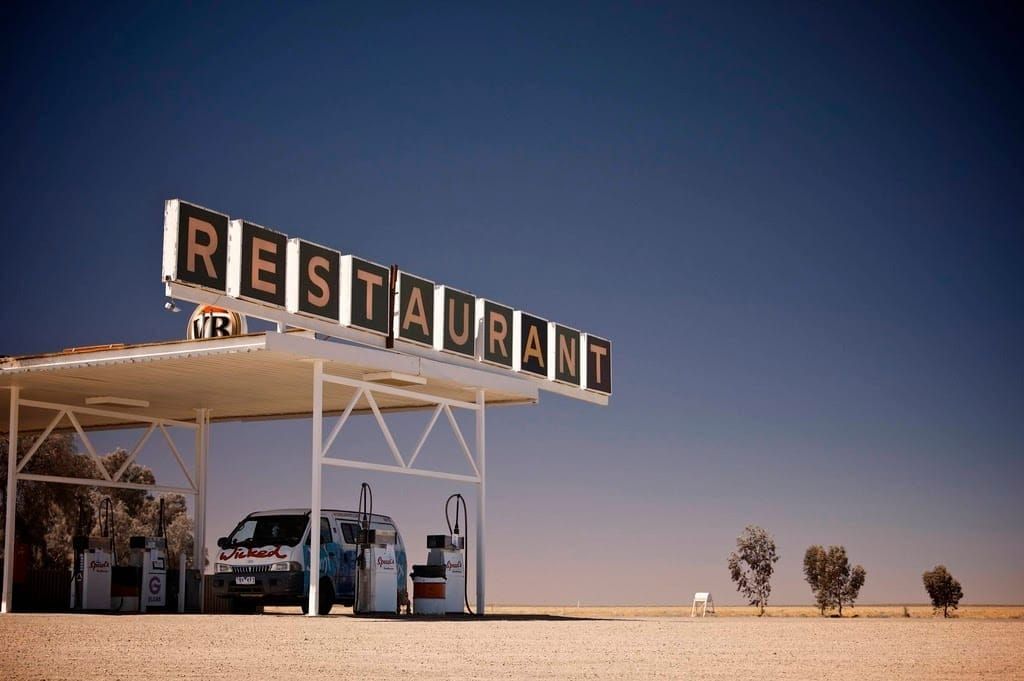
I came across a tattered copy of Jack Kerouac's On the Road as a freshman at Penn. House of Our Own -- that dusty West Philadelphia shop, whose walls lined with cracked bindings and dog-eared pages, has been supplanted by the large Barnes and Noble – the official university book store -- some nine years now. Has it been that long?
The book lay wedged between some unused syllabi for a semester. There was a Friday (or Thursday or Wednesday?) where I was inspired by a bout of rebellion to stay in – probably a subconscious aha! that frat parties secluded rather than included – when I first read the words, "I met Dean Moriarty..."
That night was horror mingled with the brevity of daydreams.
It was a beginning of a new ethos. Depending on your metaphysical view, perhaps my illimitable self had always been this transient thing, always wanting to believe, to search, to pick at the unknown. With the jazzy blasts from Sal Paradise's trumpets, the walls came crashing down, and for once, I felt free.
"It was my dream that screwed up."
"The only people for me are the mad ones, the ones who are mad to live, mad to talk, mad to be saved, the ones who never yawn or say a commonplace thing, but burn, burn, burn like fabulous roman candles across the night."
Perhaps I was a generation too late. The Beat way had resonated with the children of the sixties and seventies, but my generation, growing up as witnesses to Communism's death throes and the Internet Age, were too sober and too literal to bother with Kerouac's treatise on soul-searching. The Guardian had it somewhat right in its recent look-back:
"For many young people in America, though, the name Jack Kerouac means nothing at all. In an age where youth culture is increasingly defined by consumerism, where the road trip has been replaced by the gap year, and where it is considered radical to be cool but not cool to be radical, whither Jack Kerouac and his beatific vision?"
But for a few of us, On the Road mattered. Perhaps I was rebelling against myself, against a Protestant guilt, a strict family culture, a Sartrean existential need to define myself through the reflections of others – or just a desperate need to break out. (Out of lives lived half asleep.) For better or worse, the journeys of Sal and Dean, across America and into the Self, have propelled me to take my own journeys. So I slung on a backpack, strapped up a pair of boots, and tossed away the detritus of acceptance in lieu of visions, of "whispers of doubt and shouts of twentysomethings' jousts of thanks of unrequited regrets dreams and more, more dharma more spazz more jazz more..."
It has been a transient decade. Five continents, half-started careers and a thousand dreams born and extinguished, a thousand more unrepentant hopes... and not too many terrible regrets. But more and more, I feel, like Egg in his recent post, the tugs of permanence -- to build is just as much a biological imperative as to find.
I don't know if any of my settlements will ever become more than colonies. The need to explore, often suppressed, is like breathing. I channel it in more productive ways – more adult – now. Towards a nascent career, relationships, et. al.
What On the Road gives in dharma is tempered by a melancholic anger. For each beatific vision is a rejection of lesser choices: I find myself to be more intolerant of others -- of suppressed life -- more judgmental, quick to condemn, to justify my own choices. Cynicism often breeds elitism. My friends who are similarly transient are often also snobs; perhaps we are in some ways a punchline for Nietzschean resentiment. I haven't found the vision yet, just glimmers, to be sure. And increasingly, there is frustration that the sacrifice (should I use this most guilty of terms?) is too much.
Many of my friends view On the Road as an overly masochistic, or chauvinistic, or hedonistic, or self-centered-ness piece of work that can only appeal to wide-(emptied)-eyes high schoolers. For me, it was sublime. Kerouac's words will continue to resonate, although fainter by the passing of time:
"I see.. a world full of rucksack wanderers, Dharma Bums refusing to subscribe to the general demand that they consume production and therefore have to work for the privilege of consuming, all that crap they didn't really want anyway such as refrigerators, TV sets, cars, at least new fancy cars, certain hair oils and deodorants and general junk you finally always see a week later in the garbage anyway, all of them imprisoned in a system of work, produce, consume, work, produce, consume, I see a vision of a great rucksack revolution thousands or even millions of young Americans wandering around with rucksacks, going up to mountains to pray, making children laugh and old men glad, making young girls happy and old girls happier, all of 'em Zen Lunatics who go about writing poems that happen to appear in their heads for no reason and also by being kind and also by strange unexpected acts keep giving visions of eternal freedom to everybody and to all living creatures..."
I still struggle to reconcile the visions of Jack with my daily realities. In some ways, those visions are my unfortunate ideals. On the Road -- its fiftieth year publication anniversary coming up in September, is less of a cultural force. A new issue is coming out, with Kerouac's unedited script (certain homosexual encounters were edited out). I'll be picking up a copy (I had wanted to collect a copy in every language once), just to see if I still get the same sensations from the lyrics. In a way, it's one of my reference points -- something weirdly steadifying in this very transient journey.
I guess it all makes sense that I'll be moving to San Francisco this week.